
The Double Cleansing Method: What You Need to Know and All the Myths You Need to Forget
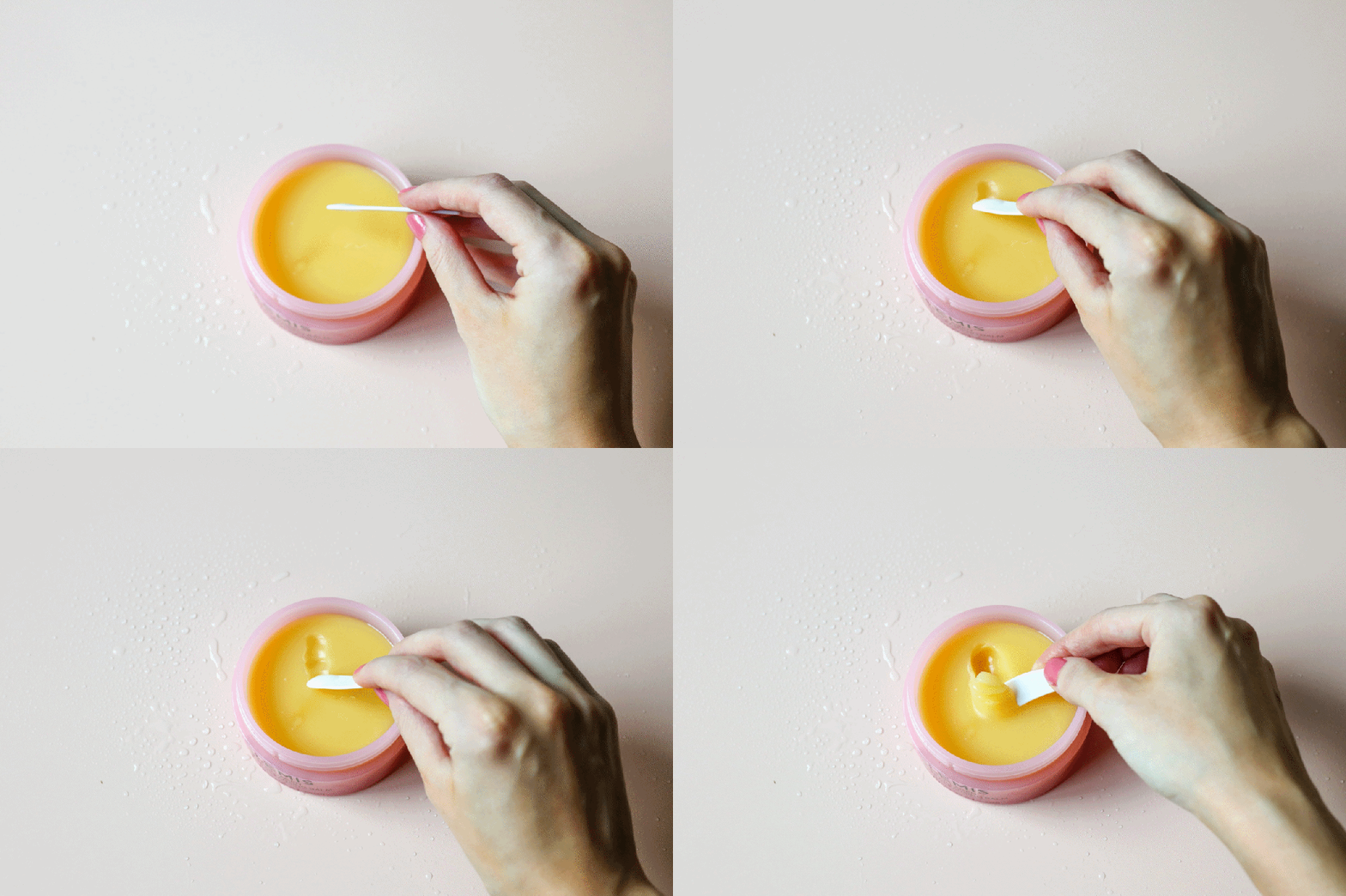
Double cleansing is more than just a method to take off your makeup, and it's something we swear by for dewy, clear, and thoroughly cleansed skin. The double cleanse method is one of the simplest changes you can make to your routine, and once you understand the science behind it, it's hard to go back.

But wait, what is double cleansing?
If you don't know about this trend, fear not - Primary is here to give you all the information you could ever need - and we're backed by studies, as always.
Double Cleansing is quite literally exactly what it sounds like - cleansing your face two times, usually as the first step of your night time routine. But this process does not utilize the same cleanser twice, rather two different cleansers, the first being an oil-based cleanser, followed by a water based cleanser.
At its core, the double cleanse method is simply about giving your skin two distinct types of cleanse instead of one.
Why an oil-based cleanser? Why cleanse twice?
Oil-based cleansers draw out oil-based impurities, including sweat, sebum, pollution, SPF, and all of your makeup (say goodbye to makeup wipes).
In particular, oil cleansers break down the oil-based film that is on your skin after a day of wearing SPF or makeup. This film helps keep the SPF and makeup on your skin all day, but at the end of the day, it is essential to cleanse it off, to prevent breakouts and closed comedones. Cleansing oils break down these impurities that a foamy, water based cleanser alone may not be able to get off - and this is backed by science1.
Chen et al. (2020), found that a facewash removed just 5.8% of water-resistant sunscreen - the strongest direct evidence for a first cleanse. Amongst 20 participants; researchers measured sunscreen residue after washing with water only, a foaming cleanser, or a cleansing oil (VISIA imaging). For waterproof sunscreen, residue was 59.3% with water, 36.8% with the foaming cleanser, and just 5.8% with the cleansing oil (statistically indistinguishable from a clean face).The takeaway: water-resistant SPF and makeup genuinely need an oil-based first step; a standard cleanser alone leaves over a third behind.
Following with the second cleanse (the water based cleanser) ensures both:
I. Removal of the oil cleanser completely from your skin; and
II. Removal of any remaining impurities.2
Slavova et al. (2025) found that an oil based step + a water based step is an efficient method to remove different types of “dirt” from the skin. While the oil step removed sebum (recipe: squalene, wax esters, triglycerides, fatty acids, cholesterol; basically synthetic skin oil) via emulsification, the study found that dimethicone (a silicone found in almost all makeup, foundation, lipstick, gloss, and many sunscreens) does not emulsify, and requires a second water step.
The double cleanse thereby transforms your skin into a completely clean slate that can more readily absorb the next products in your routine, such as serums. The night time is when skin is best equipped to get the benefit of your actives and serums. Providing those actives with a completely clean slate will allow them to work most efficiently and help you get the most out of your expensive serums.
All in all, not only is this a beneficial practice, but a relaxing, spa-like experience that ensures the grime of the day is gently lifted away, down the drain where it belongs. As an essential part of our self-care routine, we also use the double cleanse to signal to ourselves and our skin: the day is over, and time for rest and repair is finally here.
This is exactly why the double cleanse method has become a staple in so many skincare routines.
When it comes to oil vs water based cleanser, it's not a matter of choosing one over the other - the magic is in using both, in the right order.
A day in the life of a double cleanse
Still skeptical? Picture this: imagine coming home after a long, stressful day at work, skin exposed to the sun, pores taking in the city pollution (welcome to Karachi), and T-zone bearing a layer of shine.
To truly "wash off the day" as they say, you pull out your favourite cleansing balm or oil, apply it to dry skin, and let it work its magic as it gracefully melts away all your mascara, concealer, and thick layer of SPF, giving yourself a gentle massage along the way.
As you pat on water, the oil emulsifies into a milky, soft, consistency - as if it were never really an oil to begin with. Next step: your favourite non-stripping facewash. All of the day's grime, gone in under 5 minutes.
And what are you left with? An absolute glow. This is the double cleanse method in action, and it's exactly why so many people swear by it.
How to double cleanse: Step by Step
If you want the quick version of the story above:
- Apply an oil-based cleanser (balm or oil) to completely dry skin and massage to melt away makeup, SPF, and sebum.
- Add a splash of water to emulsify the oil and turn it milky, then rinse thoroughly.
- Follow with a water-based cleanser to lift away any remaining residue.
- Pat dry and move on to the rest of your routine - your skin is now a clean slate.
Following the method with the right double cleanse method products in this order ensures nothing gets left behind.
However much we love it, double cleansing is often misunderstood. Here are some of the most common myths surrounding this ritual.
Myth 1 - Double cleansing method can cause acne
Oily skin folks may feel hesitant towards cleaning their face with an oil. It is a big misconception that those with oily skin shouldn't use oil on their face.
In reality, using an oil-based cleanser helps to lift away oil-based impurities on oily skin, especially as "like dissolves like".
This can be especially beneficial in preventing breakouts caused by excess sebum, and ensure that all potential pore-clogging bits that try to linger are washed away.
For those that have experienced breakouts with an oil-based cleanser, it is important to follow with a water-based cleanser, to ensure that the residue of the cleansing balm/oil is removed. It is also important to note that you should use an oil-based cleanser that is correctly formulated, as opposed to a DIY oil cleanser made at home which does not contain emulsifiers to help the oils rinse off.
Whether you choose a cleansing balm or cleansing oil, oily skin (and all other skin types!) are sure to fall in love with the double cleanse method.
Double cleansing for oily skin isn't just safe. It's one of the most effective ways to keep excess sebum and clogged pores in check.
Myth 2 - Cleansing the face twice is stripping the skin.
The double cleanse method incorporates an oil based cleanser for a reason - they are gentle and hydrating, and formulated to remove makeup without stripping the skin. Because of this, even the driest of skin can double cleanse.
Washing your face twice with only a water-based cleanser may irritate most skin types and over-dry the skin, while following the double cleanse method correctly leaves the skin clean and not stripped, due to the two gentle steps.
Myth 3 - Oil cleansing is only necessary if you wore makeup that day.
Wrong! Since we all should be wearing SPF everyday, double cleansing is a must. The oil cleanser effectively breaks down the outer layer of SPF, so that the second water based cleanser can actually get deeper into the pores and attack impurities.
The skin is exposed to pollution and dust, and produces other oil based impurities each day, all of which an oil cleanser will effectively remove. Overall, whether you wear makeup that day or not, your skin will love it if you use an oil cleanser first (especially after wearing a mask all day!). This is why the double cleansing method holds up every single day, makeup or not.
We love it and swear by it.
Double cleansing is truly the backbone of a routine, and sets the stage for the rest of your routine that follows. This practice is sure to prevent future breakouts and blemishes, and leaves the skin soft, hydrated, and most important of all, clean.
Once you experience the difference for yourself, it's clear why the double cleansing method has earned its reputation as a skincare essential.
Ready to start your own double cleanse method? Shop Primary's Oil to Milk Cleanser to melt away makeup and SPF, then follow with the BHA Aloe Jelly Cleanser for a clean, balanced finish
You can thank us later!

- Chen et al. (2020), Journal of Cosmetic Dermatology — The strongest direct evidence for a first cleanse. 20 participants; researchers measured sunscreen residue after washing with water only, a foaming cleanser, or a cleansing oil (VISIA imaging). For waterproof sunscreen, residue was 59.3% with water, 36.8% with the foaming cleanser, and just 5.8% with the cleansing oil (statistically indistinguishable from a clean face). Takeaway: water-resistant SPF and makeup genuinely need an oil-based first step; a standard cleanser alone leaves over a third behind. https://pubmed.ncbi.nlm.nih.gov/31157512/ ↩
- Slavova et al. (2025), Molecules — Mechanistic backbone for why two steps of different chemistry make sense. Systematic in-vitro study of how surfactants lift soils off artificial skin. Sebum comes off mainly by emulsification, but silicones/dimethicone (ubiquitous in makeup and sunscreen) are only removed by a "roll-up" mechanism that depends on the surfactant type. Different soils need different removal chemistry, which is the real rationale behind pairing an oil step with a water step. https://pubmed.ncbi.nlm.nih.gov/40333845/ ↩
FAQs
Do I need to double cleanse every day?
If you wear SPF (which you should, every day), yes. Double cleansing at night ensures it's fully removed along with the day's buildup.
Making the double cleanse a nightly habit is the first step to clear skin.
Can I double cleanse if I have sensitive or dry skin?
Yes. A correctly formulated oil-based cleanser is gentle and hydrating rather than stripping, which makes the double cleanse suitable even for reactive or dry skin types.
Do oil cleansers cause breakouts?
Only if they're not removed properly with a second cleanse. Double cleansing is a system, and following it carefully leaves skin better off, not worse.
Using just an oil cleanser without following up with a facewash can leave oil-based impurities sitting on your skin, which is a sure way to trigger breakouts.


Comments