
Why Do Eyelashes Fall? Do They Grow Back?
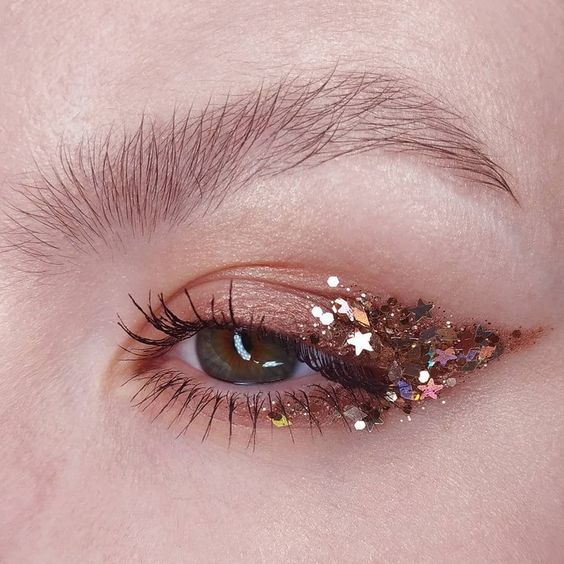
Back in the day, a fallen eyelash was cause for excitement, the kind of thing that made a friend nudge you into making a wish. Growing up, though, a fallen lash starts to feel less magical and a lot more alarming. For such a tiny part of the human body, eyelashes carry a surprisingly large chunk of our self confidence.
Finding a single fallen lash once in a while is nothing to worry about. But if you keep finding lashes in the sink after cleansing - that is a different story. It could point to important changes you need to make to your self care routine. We looked at what the studies say about lash loss, and how it could be linked to our makeup and skincare routines. Understanding the science behind why your eyelashes keep falling out is the first step toward figuring out the solution.
Why Do My Eyelashes Keep Falling Out?
Accelerated lash loss can actually reveal a lot about your health. While eyelashes are sometimes called the windows of the soul, they can also point to more serious conditions such as thyroid issues, autoimmune disorders, inflammation, and in rare cases, something more serious.
Here are the most common culprits:
1. Mascara Use
A 2013 study in the International Journal of Trichology offers a useful clue about the link between mascara use and lash fall1. Researchers surveyed 128 regular mascara users and found that about 19 percent reported losing eyelashes, with the risk rising the longer someone had used mascara over the years rather than how many hours they wore it in a day. Interestingly, waterproof versus regular formulas made no significant difference on their own. What stood out was removal: the people who reached for plain water to take off waterproof mascara reported noticeably more lash fall (27 percent versus 13 percent), which the authors linked to the hard finger-rubbing that water forces when it simply cannot break down a waterproof formula.
The takeaway: water and water based cleansers make you scrub, so you are tugging at the very lashes you are trying to keep. An oil-based cleanser gently melts away stubborn and waterproof mascara and makeup so it slides away with almost no friction, letting you skip the rubbing that the lashes pay for.
2. Stress
Stress can also cause lash loss, just in a different way than you might think. Stress doesn't attack the lash itself. It disrupts the timing of the hair growth cycle. Every hair, on your scalp and your lash line, moves through a growth phase and a resting phase, and on a healthy scalp roughly 85 to 90 percent of hairs are actively growing at any moment while 10 to 15 percent rest before they shed. A major physical or emotional shock can force a large share of those growing hairs to stop early and drop into the resting phase all at once, a condition dermatologists call telogen effluvium. Clinical reviews describe up to 70 percent of growing hairs shifting into shedding mode after a significant trigger2.
The strange part is the delay. The shedding does not show up during the stressful period. It appears one to three months later, which is why so many people never connect the two3. The clearest real-world proof came during the pandemic. In one study of 39 patients, everyone who developed this shedding did so within two to three months of a COVID-19 infection, with the illness acting as the systemic stressor that reset the hair cycle4.
Here is the reassuring part. Telogen effluvium is self-limiting and reversible. In about 95 percent of acute cases the hair grows back once the trigger passes and the body settles3. Most of this research looks at scalp hair, and eyelashes follow the same growth cycle, so the same resting-phase shedding can reach the lash line when your system is under real strain. If you are noticing more lashes than usual on your cheek after a hard few months, it is worth knowing this pattern is common, temporary, and not a sign your lashes are gone for good.
3. Thyroid
The thyroid is a small gland in your neck responsible for regulating many of your body's hormones.
Your thyroid sets the pace for a lot of your body, and hair growth is on the list. Thyroid hormones help regulate the follicle's growth cycle, so when levels run too low or too high, follicles can slip early into their resting phase and shed. On the face this often shows up first as thinning at the outer third of the eyebrows, a pattern doctors have recognised for years, and the eyelashes can thin too. A 2020 case in the Cleveland Clinic Journal of Medicine described a woman whose lashes fell from all four lids because of an underactive thyroid5. So if sudden brow or lash thinning shows up alongside things like changes in weight, fatigue or feeling cold, that is a conversation for your doctor and a blood test rather than something a serum can fix.
4. Irritation From Falsies or Extensions
Falsies and lash extensions can be hard on the lashes underneath them. One survey found that around 27 percent of women who had worn extensions reported problems like redness, pain and swollen, itchy eyelids6. Lashes and extensions are lovely to enjoy; the damage comes from the pulling and peeling. Letting a professional remove extensions properly, and dissolving glue residue and eye makeup with oil rather than rubbing at them, protects the lashes you are trying to frame.
5. Alopecia
Alopecia is an autoimmune condition that can show up in a number of ways, and it can stop hair growth on the body, head, or face altogether. Research suggests the condition causes the body to turn against its own hair follicles, leading to full, partial, or episodic hair loss7.
There is currently no long term cure for alopecia, but doctors can prescribe treatments that help hair regrow faster.
6. Inflammation
Some chronic inflammatory conditions can turn the body against itself. Diseases such as rheumatoid arthritis and lupus target healthy cells and tissue in the joints, organs, and blood vessels.
Some of these conditions do not show obvious external symptoms, which is exactly why paying attention to small changes, like eyelash loss, can help catch an underlying issue early.
7. Trichotillomania
Trichotillomania is a disorder that causes an irresistible urge to pull out hair, whether from the scalp, eyebrows, or lashes. It is a body-focused repetitive behaviour, which means a person feels a strong, hard-to-resist urge to pull out their own hair, often as a way to release tension or anxiety. The eyelashes and eyebrows are among the most commonly pulled areas, and it frequently starts in childhood or the early teens, around ages nine to thirteen.
Because the loss comes from repeated pulling, it tends to look patchy and uneven, with lashes at different lengths, and it is sometimes mistaken for alopecia areata. This one deserves care and no judgement. It is a recognised medical condition rather than a habit someone can simply be told to quit, and it responds well to support like habit-reversal therapy, sometimes alongside medication. Lashes can and do regrow once the pulling eases.
Do Eyelashes Grow Back?
In almost every everyday situation, yes. A lash lost to rubbing of the eyes, a stray mascara wand or a night you forgot to take your makeup off will grow back on its own. Losing a few is completely normal. You shed some lashes every day without ever noticing, the same way you shed hair from your scalp.
That is because lashes are never static. Every single one is moving through a growth cycle with three stages: a growth phase, a short transition, and a resting phase. In the anagen, or growth phase, lashes are actively growing, which can take several weeks. In the catagen, or transition phase, growth stops and the follicle shrinks. In the telogen, or resting, phase, lashes are fully formed and eventually shed to make room for new growth. At any given moment your lash line is a mix of lashes at different points in that cycle, which is why they all sit at slightly different lengths.
A full cycle typically takes six to ten weeks, though a single lash that falls out can take anywhere from two to sixteen weeks to fully regrow, depending on the follicle. A primary measurement study that tracked real eyelashes in 29 women (four followed weekly over nine months). It found lashes grow at about 0.12 ± 0.05 mm per day, with an active growth phase of 34 ± 9 days and a full cycle of roughly 90 ± 5 days8. This is the evidence that lashes are on a continuous renewal cycle and that their short growth phase is why they never reach scalp-hair length.
However, eyelash regrowth depends on the individual case. If the lid skin is not overly damaged or irritated, your lashes have a strong chance of growing back over time. If it has faced repeated trauma from rubbing or pulling, though, the eyelash follicles can scar or be damaged permanently. The usual culprits are serious burns, long-standing lid inflammation left untreated, repeated pulling, and certain medical or cosmetic procedures. This is the difference dermatologists describe between temporary, non-scarring loss, where lashes return, and scarring loss, where they may not.
So the honest, reassuring takeaway is this: everyday shedding takes care of itself, and the smartest thing you can do is protect the cycle rather than rush it. Stay gentle with the lash line. Avoid tugging, pulling and hard rubbing, take eye makeup off by letting it dissolve rather than dragging at it, and deal with any lid irritation early instead of letting it settle in. Your lashes are already designed to renew themselves. Your job is simply to give them a calm place to do it.
How to Help Eyelashes Grow Back
The best first step is getting checked for any underlying condition or visiting a dermatologist, since treatment may be necessary.
If you are confident you do not have an underlying illness but still keep wondering why your eyelashes keep falling out, here is what actually helps.
Cleanliness Is Your New Best Friend
We get it. All you want to do after a long day is crash, and taking off your mascara and eyeliner feels like the last thing on your list.
But leaving mascara on overnight irritates the eyelid and speeds up lash loss. If you wear eyelash extensions, gently clean them each night to remove buildup.
Irritated eyelids and a compromised skin barrier often go hand in hand. If your skin around the eyes feels reactive or dry on top of the lash shedding, our CeraPair Barrier Repair Moisturiser is formulated to calm and strengthen that barrier so irritation stops making things worse.
Say Goodbye to Physical Stress
Stress is rough, and it can lead to rubbing or itching that pulls lashes out without you even realizing it.
Avoid rubbing your lashes with your palms, fingertips, or a rough makeup remover. If cotton rounds are not working for you, try a gentle oil, balm or milk cleanser instead, and go easy on the eyelash curler. Your lashes will curl just fine without a death grip.
Switch Up Your Eye Makeup
Figuring out the exact cause of lash loss can take some trial and error. If you have ruled everything else out and you are still noticing stray lashes, it might be time to change your makeup.
Choose hypoallergenic formulas with a soft finish that will not irritate your eyelid, and always toss your mascara if you have used it during an eye infection. And please, never share eye makeup with anyone, best friend included.
Final Verdict
So here it is. Proper care, refraining from rubbing, ditching irritating products, and being a little more gentle with your routine can go a long way toward healthy eyelash growth.
If you are still asking yourself why your eyelashes keep falling out after trying all of this, scarring or an underlying condition could be to blame, and it is worth getting checked out. But for most people, patience paired with the right habits is enough to bring those lashes back.
- "Mascara Induced Milphosis, an Etiological Evaluation," International Journal of Trichology, 2013. https://journals.lww.com/ijot/fulltext/2013/05030/mascara_induced_milphosis,_an_etiological.10.aspx ↩
- Telogen Effluvium — StatPearls, NIH (Hughes, Syed, Saleh, 2024). https://www.ncbi.nlm.nih.gov/books/NBK430848/ ↩
- Telogen Effluvium: A Review of the Literature — Asghar et al., Cureus, 2020. cureus.com/articles/32514-telogen-effluvium-a-review-of-the-literature.pdf ↩
- Sharquie and Jabbar, Irish Journal of Medical Science, 2022. https://link.springer.com/article/10.1007/s11845-021-02754-5 ↩
- Hypothyroidism, eyelash loss — Cleveland Clinic Journal of Medicine. https://www.ccjm.org/content/87/12/717 ↩
- Aesthetic Dermatology: Eyelash Extensions. https://www.mdedge.com/dermatology/article/107385/aesthetic-dermatology/aesthetic-dermatology-eyelash-extensions ↩
- Eyebrow and Eyelash Alopecia: A Clinical Review. https://link.springer.com/article/10.1007/s40257-022-00729-5 ↩
- Thibaut et al., "Human eyelash characterization," British Journal of Dermatology, 2010. https://academic.oup.com/bjd/article-abstract/162/2/304/6642272 ↩
FAQs
Do I need to double cleanse every day?
If you wear SPF (which you should, every day), yes. Double cleansing at night ensures it's fully removed along with the day's buildup.
Making the double cleanse a nightly habit is the first step to clear skin.
Can I double cleanse if I have sensitive or dry skin?
Yes. A correctly formulated oil-based cleanser is gentle and hydrating rather than stripping, which makes the double cleanse suitable even for reactive or dry skin types.
Do oil cleansers cause breakouts?
Only if they're not removed properly with a second cleanse. Double cleansing is a system, and following it carefully leaves skin better off, not worse.
Using just an oil cleanser without following up with a facewash can leave oil-based impurities sitting on your skin, which is a sure way to trigger breakouts.
Comments
maria —
I couldn’t believe how much my lashes grew so long and full With Eyelash Growth Serum By DermalMD. I feel like I look like I have fake lashes, but a natural look. I am more confident to wear NO mascara also! My lashes are so nice and long!
dfqdmrchzg —
Muchas gracias. ?Como puedo iniciar sesion?
vuNnTAQGCWHFtySx —
YctudIBDONwZrVMs
SJOdCAybQfszcG —
GdkDImZuJegA